I’ve officially been a Muslim for almost a year and I can confidently say I have absolutely no regrets about my decision. Islam has given me so much peace during this insanely difficult time in the world and I honestly don’t know what I would’ve done if I hadn’t found Islam when I did. Over the past year, it’s become very clear to me that being a revert to Islam is a completely different experience compared to being born into a Muslim family. I won’t say one is better than the other, they’re just different experiences. For me being a revert is so special. It’s amazing to think about how Allah perfectly planned for my life to lead to Islam against all of the odds. Islam found me when I was more attached to this fleeting world than I had ever been in my entire life. I was shown what a gift and great relief it is to be rooted in something eternal. I think reverts are so special because we all have unique stories and unlikely paths that directed us to Allah. The hard journey reverts take to find Islam does not end after taking the shahada. In fact, the journey grows more difficult. Some reverts face issues with family or work. Some are not accepted into the Muslim community. Some face problems with breaking the habits of their old life. It can honestly be a bit isolating at times. For me, I felt even more isolated due to the COVID lockdown immediately following my conversion. I still have yet to go to the mosque as a new Muslim so opportunities for engagement with the rest of the Muslim community are limited. Looking back at my journey as a new Muslim, I was thinking of all of the things that had slightly frustrated me at the beginning of my journey and I realized that there may be other people out there struggling with the same issues. Several of my biggest problems could’ve easily been solved if I had just known the best sites online for my needs. For that reason, I’ve created this post just to maybe help some other reverts out by showing some of my favorite resources. However, the internet can be a scary place, especially when it comes to information about Islam. During my early research, I often found sites on two sides of the spectrum. One side being Islamophobic sites publishing out-of-context Quran verses or bogus statistics on terrorism. The other type of sites I would often find were ones ran by apparently uneducated Muslims answering people’s questions about Islam (completely anonymously and without any accountability). These sites often undermined women’s rights in Islam, and one such site I visited even advocated for the circumcision of females, a practice that has no basis in Islam and comes from a few Hadith that were declared unauthentic years ago. Either side of this spectrum is filled with so much misinformation that I became so frustrated that I didn’t speak Arabic and couldn’t have access to better resources. I’m sure so many other reverts understand this struggle so I’d like to share some websites I have tried and can say I trust. I have no connection to these sites and none of this post is sponsored, I just honestly want to share what I have found to be so helpful. You can easily reach any of these sites by simply clicking on the appropriate photo.I have also added a small glossary of Islamic terms at the end of this post that I think will be useful. Good luck with your journey as a new Muslim and may Allah grant you ease, in sha Allah.
For Reading the Quran
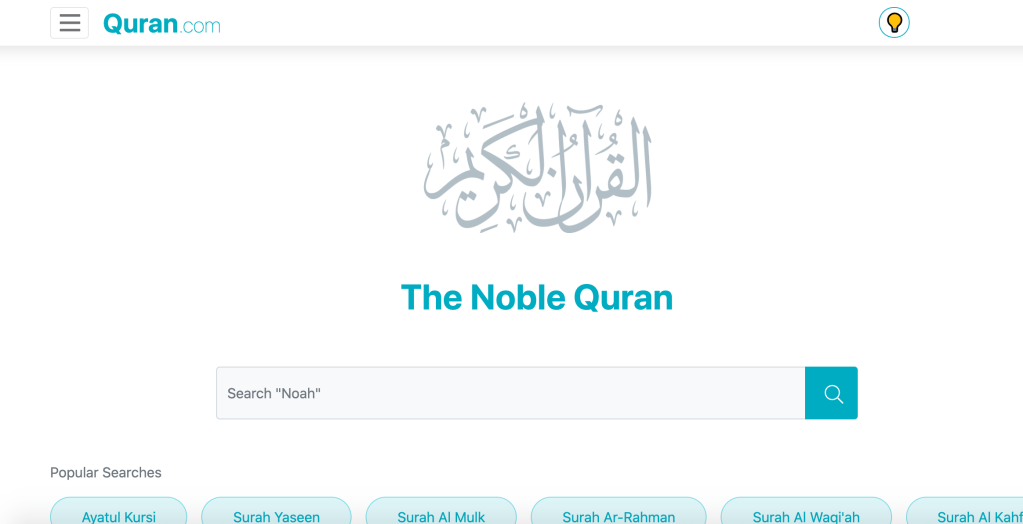
This website is truly amazing. I certainly prefer reading the Quran from a paper book but I also really love this resource so much because it has so many features. The first thing I love about this site is that you have so many different options as far as translations and reciters. There are about a dozen different translations for just English alone! Plus many more languages, often offering more than one translation. I really love trying to read Surah Al-Kahf in a different translation every Friday because it helps me grasp the meaning better, even if I can’t read the original Arabic. This site is also great just for listening to the Quran and I often enjoy listening to the Quran in Arabic and reading along in English. Another great feature is that you can examine the Arabic text very easily. Just hover your mouse over an Arabic word and it gives you the exact translation of the single word. If you press on the word then it pronounces it slowly for you. This is especially helpful with Quran memorization. The final feature that I love is the “Surah Info” tab towards the right. Pressing this will pull up lots of information about the background of the surah as well as guidance with reading the text. I strongly recommend using this resource when you have questions about exactly what you are reading in the Quran because it’s definitely not an easy or simple text to read. The Quran can easily be misunderstood, same as any other historical document.
For Memorizing the Quran

I was honestly so excited when I found this website. It has helped me so much with memorizing the Quran and I wish I had known about it when I first converted. Memorizing Surah al-Fatiha was probably one of the most difficult things I’ve done in my life. Yes, I know that sounds super dramatic, but it’s true and I’m sure there are so many other reverts out there who feel the same way. If you’re struggling with memorizing even a single ayat, you’re not alone. Quran memorization is difficult for Arabic speakers and it’s especially difficult for non-Arabic speakers. This website will make things a bit easier for you in sha Allah. The site has so many different options including picking different reciters and speeds. You also have the option for the reciter to repeat a given ayat or surah over and over again to assist with repetition. It also lets you read along in Arabic to help you understand what all of the Arabic characters sound like. I really wish I had known about this site when I had started memorizing al-Fatiha because I’m sure it would have sped up the process a lot.
For Finding Hadith
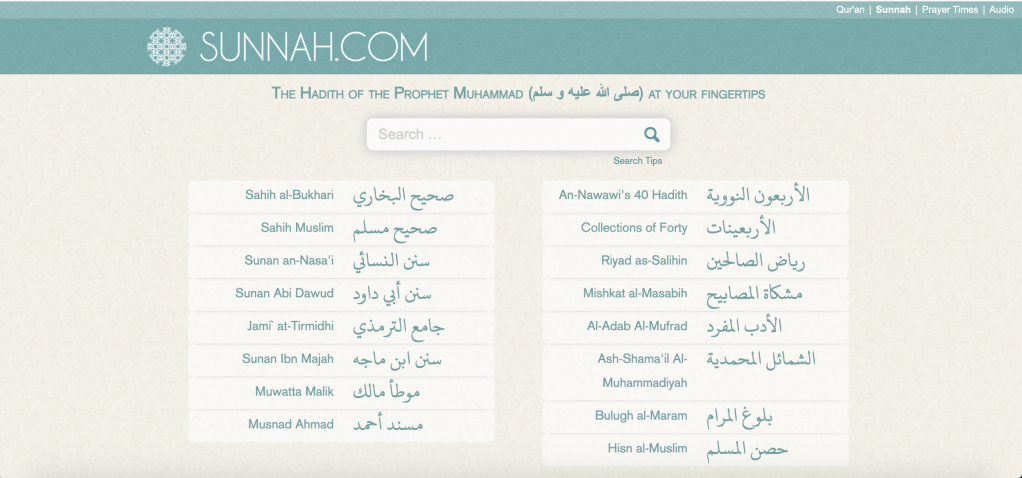
My initial experience with Hadith was honestly very frustrating. Hadith is very important in Islam because it’s the second most important compilation of writings just behind the Quran itself. Unfortunately, authentic Hadith can be difficult to find when you can’t read Arabic. When I first started researching Hadith I would often have to copy the Arabic text and paste it into Google Translate. I do not recommend doing this because it can easily foster so many misunderstandings. After all, Google Translate is not equipped to instantly translate a highly important text from over 1,000 years ago. After much searching and trial and error, I found sunnah.com and it’s now the main place I turn to to find Hadith. I love this website because it has good English translations but also has the original Arabic so you can always ask a native Arabic speaker to help you if the English translation is not good. This particular site also offers translations in Urdu. I also love this resource because it’s so easy to figure out if the Hadith is genuine. Whenever you’re viewing a Hadith all you have to do is look in the bottom left corner for the “grade”. Here are the explanations for each grade you may come across in Hadith.
A “Sahih” grade means that the Hadith is accepted as authentic by scholars.
A “Hasan” grade means that the Hadith is fairly strong but cannot be deemed unquestionably authentic.
A “Daif” grade means that the Hadith is weak and there are many doubts among scholars about it’s authenticity.
These are the most common grades you may run into. Try to only focus on Hadith that have the sahih rating. There are plenty of sahih-rated Hadith, so it’s really not necessary to look at the Hadith that can’t be trusted 100%. I would recommend researching the Hadith of other grades after becoming familiar with sahih Hadith. This site is great because it allows you to search all the main books of Hadith at once and will give you the Hadith in English as well as the original Arabic. I always like having the original Arabic because sometimes the English translation doesn’t make complete sense so I can simply save the Arabic and have it interpreted by an Arabic speaker.
For Islamic Education
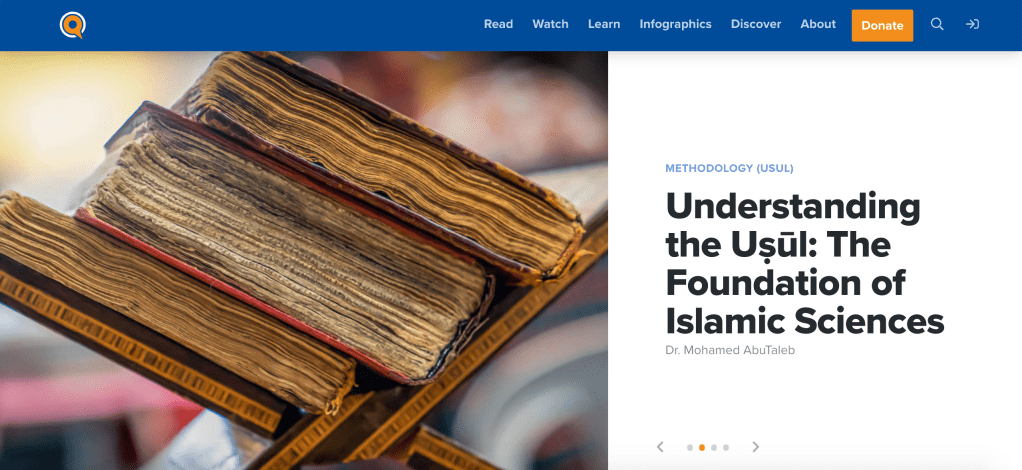
Honestly there are a lot of pretty amazing resources and websites out there that provide great information on Islam in English but the Yaqeen Institute for Islamic Research is always my go-to for so many reasons. First, I love that this site has videos, detailed papers, infographics, and more in order to present material in a range of different mediums. There are short informational videos on a topic, and it’s accompanied by a long research paper that sites every single Hadith and verse from the Quran referred to in the video. It also breaks the verses down and logically presents the evidence surrounding the given topic. It’s just so helpful to me that I can watch a video and get the information I wanted really quickly but I also have the option to go back and examine everything. The site is also very transparent about who its scholars are and what their credentials are. I really like that it’s very easy to find information about the history of Islam or theology but there’s also a lot of information about Islam in the 21st century and how to apply Islamic principles into our everyday lives. I can truly recommend this resource to anyone, whether you are born a Muslim or are new to the study of Islam.
For Learning to Pray
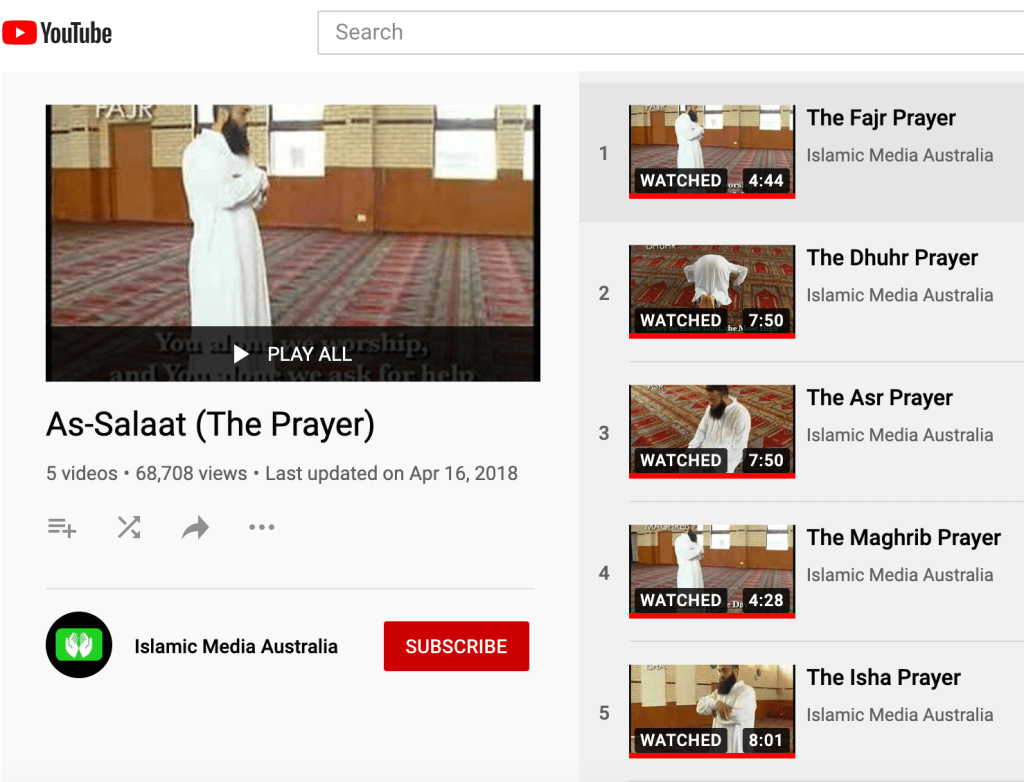
Learning how to pray is by far the most daunting, but rewarding challenge I faced as a revert Muslim. First I had to learn how to perform ablution and memorize the order of the steps. Then I had to memorize the steps involved in salah including how many rakat and what to say at each step. For a new Muslim, I highly recommend making the 5 daily prayers an immediate and permeant part of your daily routine. Get into the habit of forming your day around your prayers and make up any late prayers as soon as possible and never go to bed without fulfilling your obligation of the 5 prayers. Everyone makes mistakes or gets lazy, but you should make a great effort to perform your prayers every single day. Even if you’ve gotten into the habit of missing prayers, you should focus on the future and build a strong connection with Allah through daily prayers. Reverts to Islam will experience great difficulty making a habit of praying because it’s undeniably difficult when Arabic is not your native language. Do not be discouraged. It took me months to memorize al Fatiha perfectly and I constantly had to remind myself that beating myself up over my lack of progress would accomplish nothing. Everyone has their own journey and day by day things will get easier, in sha Allah. In my first month of praying I couldn’t say hardly anything in Arabic. The method that worked for me to build up my confidence in praying was using guided YouTube videos. The link to the videos I used is here. I loved these videos because they go through every step slowly and the reciter has a beautiful and calming voice. All I had to do was pull up the video on my phone, put the phone at the end of my prayer mat, and press play. I could focus on every word and work on committing it to memory every single day, five times a day. It’s also great because there is a separate video for every prayer of the day so you don’t have to remember how many rakat to do at a particular time. After a few weeks, I found myself reciting the words with the video and not needing to look at the screen to know what step to do. It’s like training wheels for praying. However, I do want to stress that just like no one keeps their training wheels on their bike forever, in the same way, you should not plan on using the videos long-term. Use them for a few weeks and then work on praying without the videos or turning the volume down so that you have to recite by yourself. Eventually, you won’t need the videos at all anymore, in sha Allah.
For Wearing Hijab
There’s a lot of pressure on revert women to start wearing hijab immediately after saying the shahada, and while I do personally believe that is the best way and it was the path I took, I understand the difficulties revert women face. Revert women don’t have the same luxuries that born-Muslim girls have. We don’t get the ease into wearing a hijab and practice when we’re young. We don’t have a mother there to guide us on the best styles or buy scarves for us. Most of the time revert women are completely on their own and there’s a lot of pressure from the Muslim community to wear it immediately. Don’t get me wrong, hijab is a requirement for every Muslim woman but I think the Muslim community could do a better job at understanding the hurdles reverts have to overcome. I was lucky because there were no issues within my work or family in my choice to wear the hijab, but this isn’t always the case with every woman. I still had a hijab journey like any other Muslim. I didn’t start wearing loose dresses and a perfect hijab overnight. In fact, it was impossible because most of my clothes were too tight or didn’t cover properly and I didn’t have tons of extra money to buy beautiful abayas. Keep in mind that I was living in Poland during the time of my conversion so it wasn’t even possible for me to go to any sort of Islamic dress shop like they have in the Middle-East. There are things I wore immediately after my conversion that I wouldn’t wear today. I’m okay with my journey and how I wasn’t perfect at the beginning and I’m still not perfect now. I’m still on my hijab journey and I’d love to help other reverts start or continue their hijab journey. Wearing a hijab is a challenge but it shouldn’t be overly complicated and difficult so I’d like to share some of the things over learned that I think could ease the burden for other revert Muslims.
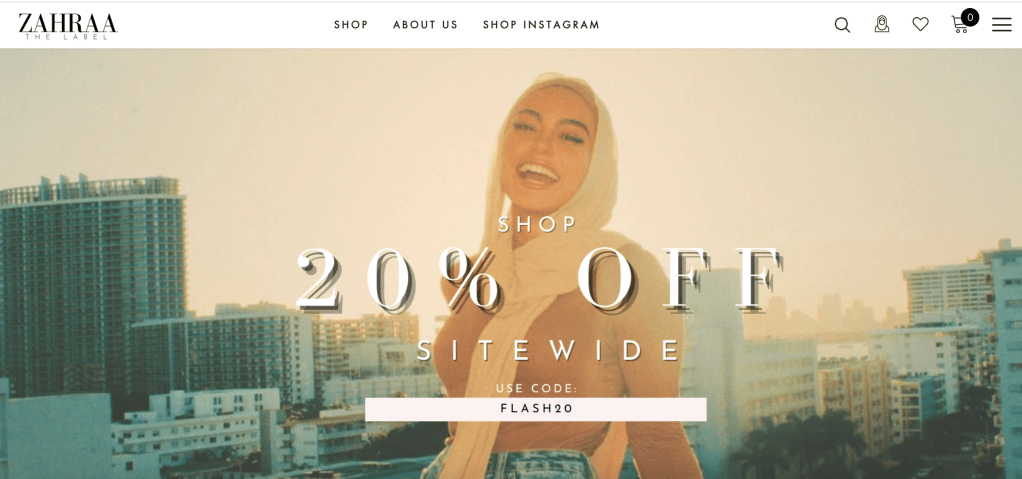
The first brand I can recommend is Zahraa the Label. This brand didn’t exist when I converted in February of 2019 but it’s officially my favorite place to buy hijabs and accessories. The first reason is the price. There are so many great hijab companies all over the world but many of them are outside of my price range. This brand has high quality hijabs that are actually affordable. They aren’t as cheap as hijabs you may find that are made in China but trust me, if you invest in like 5 amazing hijabs you’ll be so thankful in the long run. Zahraa the Label is the best because, not only can you get hijabs, but you can get under-scarves. My favorite under-scarf is the one that covers the neck too. It’s really difficult to find these and the neck covering is amazing because you can be assured that you’re wearing the hijab properly, the way the Quran instructs, all day, and don’t have to constantly check and make sure your neck isn’t showing. Also, I can’t even describe the fabric of the under-scarves; it’s buttery soft, doesn’t pill, and comes in several great colors. The hijabs this brand sells are unfortunately only chiffon. I know many people prefer materials like viscose and jersey but I really don’t wear these fabrics often so I can’t recommend anything. I think chiffon is a great material, especially if you’re new to wearing hijab because it will go with all of your outfits and it looks so beautiful and polished. It’s lightweight so I often forget I’m even wearing a hijab. They have dozens of colors, I got one in the “modest nude” and I honestly think I usually wear that hijab 5 times a week. The final game-changer that I love about this brand is the two for $10 hijab magnets. Don’t even bother trying to use pins, they’ll just ruin your hijabs. These magnets are so strong and are currently the cheapest hijab magnets I can find. Most brands sell them for 12-15 dollars for a two-pack. They take some getting used to cause they’re a bit difficult to properly pull apart and then put together to hold your hijab in place. If any of these products are slightly out of your price range, don’t worry. The site has sales all of the time so you never have to pay full price.
Extra: Islamic Vocabulary
When I was considering converting to Islam I was, naturally, doing a ton of research on the religion and its practices, but sometimes I felt so lost in the terminology. You see, some Arabic words used in Islam just don’t translate to English at all so Muslims just use the Arabic word. This was really confusing to me because I kept forgetting the meanings of particular words or mixing them up. For that reason, I’ve compiled a little list of some of the most common words/phrases you’ll see in your research that will be of great benefit to memorize.
Alahakbar: “Allah is the Greatest”
Alhamdulillah: “Praise be to Allah”
Ayat: a verse in the Quran
Dua: a prayer of supplication or request (this can be prayed in your native language)
Hadith: writings on the words/traditions of Prophet Muhammadﷺ
Hajj: pilgrimage to Mecca required of every Muslim
Halal: permissible in Islam
Haram: sinful, unpermissible
Iftar: meal consumed at sunset to break the fast during Ramadan
Imam: main worship leader/scholar in a mosque
In sha Allah: God-Willing
Salat/Salah: prayer
Shahada: declaration of faith
Sheikh: scholar
Subhanallah: “Glory to Allah”
Suhoor: early morning meal consumed before sunrise before fasting
Sunnah: practices of Prophet Muhammadﷺ
Surah: a chapter in the Quran
Zakat: charity required of every Muslim
This is by no means a comprehensive list, but these are the terms I came into contact with the most that I wish I had memorized the meanings early on.
Disclaimer: I have no connection to any of these sites/brands and I’m making no money from this post. These are all just my honest opinions about things that have helped me as a revert 🙂
 The Great Wide Somewhere